For many parents, the year their child is five – preparing to turn six – comes with a big question: Should we stay at our local stand-alone nursery school for Grade 0, or is it time to move to a preparatory or primary school?
At Little Knights Pre School, we believe that a calm, confident transition to “big school” begins long before a child puts on their Grade 1 uniform. It begins with how they experience Grade 0 (also known as Grade R), and just as importantly, where they experience it.
More Than Just Play: Grade 0 in the Foundation Phase
Parents may wonder why Grade 0 is considered part of our Preparatory School’s Foundation Phase when the children are still housed in the Pre School and don’t wear a formal school uniform.
The answer lies in giving five- and six-year-olds the exact balance they need at this stage of childhood. Placing Grade 0 within the Foundation Phase (Grades 0 to 3) is about curriculum governance. Behind the scenes, your child’s learning is intentionally planned, taught and assessed as an integrated part of our Foundation Phase curriculum alongside the South African CAPS framework. This ensures that the eventual step into Grade 1 is completely seamless.
On a day-to-day level, our Grade 0 classes remain warmly housed within the Pre School environment. They keep the familiar Pre School daily routine, school times and play-based approach that naturally suit children of this age. And because no formal school uniform is required in Grade 0, children are completely free to paint, climb, explore outdoors and dive into messy, hands-on discovery without restriction.
But while our Grade 0 learners are still very much part of the nurturing daily rhythms of the Pre School, they officially fall within the Foundation Phase. There is a reason the Department of Basic Education groups Grade 0 with the early primary years rather than separating it entirely: this specific year is the launchpad for formal schooling.
At five turning six, a child’s brain goes through a remarkable developmental shift. Neurologically and socially, children at this age are moving from purely parallel or associative play into cooperative problem-solving, rule-based thinking and deeper emotional regulation.
As Fred Rogers famously observed: “Play is often talked about as if it were a relief from serious learning. But for children, play is serious learning. Play is really the work of childhood.”
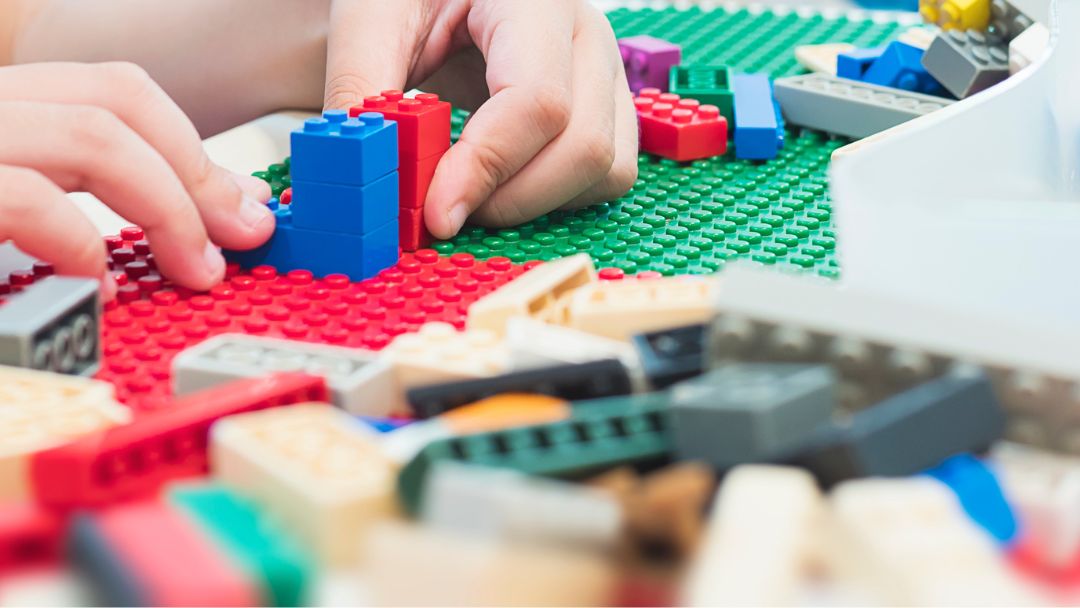
In our Grade 0 classrooms, learning remains rooted in play-based, student-led and practical discovery – because that is how five- and six-year-olds wire their brains. Yet behind the scenes, that play is intentionally structured to build the exact building blocks required for future academic life:
- Early Literacy and Phonemic Awareness: Hearing, pulling apart and blending sounds before ever being asked to memorise spelling lists.
- Foundational Numeracy: Understanding number sense, spatial patterns and quantity through hands-on concrete apparatus.
- Physical and Fine Motor Readiness: Developing core strength for sitting at a desk, crossing the midline and refining pencil grip.
- Executive Functioning: Learning how to manage impulses, pack away one’s own belongings, follow multi-step instructions and bounce back when a tower of blocks falls down.
What South African Research Tells Us
Research in South Africa consistently points to a critical truth: attending Grade 0 is only half the equation; the alignment and quality of that year are what actually make the difference.
Extensive local research conducted by RESEP (Research on Socio-Economic Policy) at Stellenbosch University examining the impact of Grade 0 across South Africa found that while access to Grade 0 has grown, its true impact on Grade 1 success depends heavily on how closely the Grade 0 programme aligns with the expectations of the primary school it feeds into. In fact, studies on South African Foundation Phase transitions highlight that up to 65% of learners nationwide enter Grade 1 without the foundational pre-reading and executive concepts needed to thrive, largely due to a disconnect between informal preschool environments and formal primary school classrooms.
Similarly, findings from South Africa’s Thrive by Five Index underscore that early learning programmes must intentionally balance cognitive fundamentals with social-emotional functioning. When a child has to navigate both a steep academic jump and a completely foreign social and physical environment at the exact same time in Grade 1, their emotional energy is spent on survival and adaptation rather than learning.
Stepping Out of the Stand-Alone Pre School Bubble
Stand-alone playgroups and nursery schools play a wonderful role in a toddler’s earliest years. However, when a child stays in a stand-alone pre school for Grade 0 and only moves to a primary school for Grade 1, they have to tackle two massive hurdles at once: adjusting to a full, structured academic day while simultaneously figuring out new uniforms, unfamiliar faces, bigger playgrounds and a whole new school culture.
Our Grade 0 classrooms at Knights are thoughtfully designed to bridge the gap between the informal, play-centred world of Grade 00 and the structured expectations of Grade 1. Through carefully planned classroom layouts and gradually increased opportunities for tabletop activities, our children naturally develop the routines, behaviours and learning habits that will support them in their next chapter. Importantly, this growing structure never replaces the magic of childhood – creative exploration, muddy hands, imaginative play and personal choice remain at the heart of their day.
When Grade 0 and Grade 1 exist under the same school roof, something special happens:
- True Curriculum Continuity: Because Grade 0 is governed, planned and assessed as part of our Foundation Phase, our Literacy and Numeracy programmes flow directly into Grade 1. Our Grade 0 and Grade 1 teachers talk to one another, plan together, collaborate closely and know exactly what each child needs.
- Familiar Faces and Spaces: While enjoying the safety of the Pre School routines, our #LittleKnights are already part of the wider campus life. By the time our #LittleKnights put on their Grade 1 uniform as #YoungKnights, they already know the campus grounds, the teachers, the sports fields and the friends sitting next to them.
- Emotional Security: Instead of experiencing a sudden, intimidating shift into “big school,” children simply take the next natural step inside a community that already knows their name.
Finding a Home to Grow and Belong
American author and educator Pam Leo put it beautifully: “Children do not grow by themselves. They grow in a web of relationships.”
Choosing a school – whether your child is entering Grade 000, Grade 00 or stepping into Grade 0 – isn’t just about picking a curriculum for the next twelve months. It is about finding a community where your child feels seen, safe and known.
When a child joins Knights early in their pre school journey, they aren’t just preparing for a test or ticking off developmental checklists. They are putting down roots. They are building friendships that will carry them onto the sports fields, onto the stage and through the classrooms of their preparatory school years. When children feel a deep sense of belonging, they don’t have to worry about whether they fit in – their minds and hearts are completely free to focus on growing, learning and embracing the exciting challenges ahead.
Come Experience the Knights Family for Yourself
The best way to know if a school feels like home is to walk through the gates and see our classrooms in action. Whether you are looking ahead to Grade 0 or wanting to give your younger child a seamless start in our pre school, we would love to welcome you to our campus.
Book a personal tour with us today – come meet our passionate teachers, see our #LittleKnights at play, and discover how we build the bridge to a confident, happy future in preparatory school.